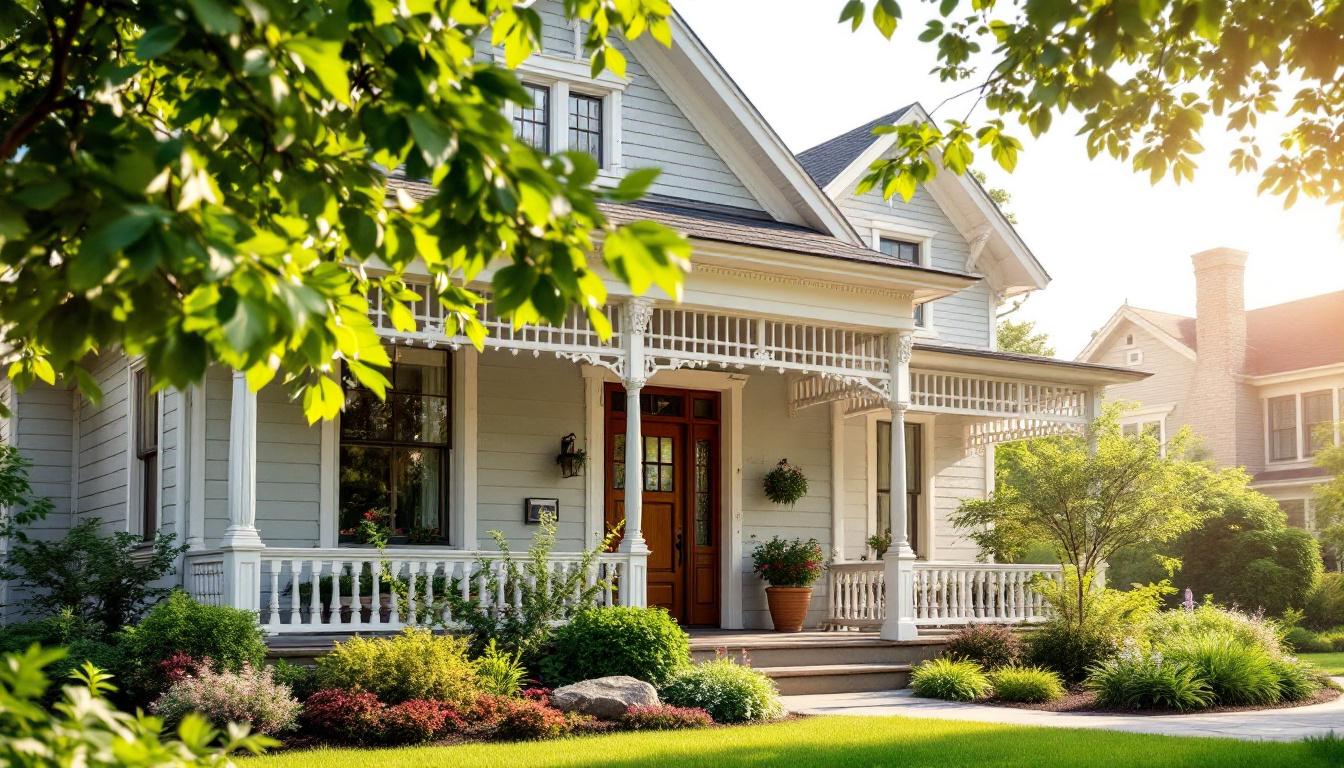
Maximizing returns on old properties in the US has become one of the most compelling strategies for real estate investors navigating today's competitive market. With the National Association of Realtors (NAR) reporting significant price appreciation across older housing stock, the opportunity is real and growing. Old properties carry unique advantages: established neighborhoods, solid construction, and often undervalued price points relative to their potential. At current mortgage rates averaging around 6.5%, smart investors are looking beyond new builds and turning their attention to properties with history. The challenge lies in knowing where to look, what to fix, and how to finance it all intelligently.
Understanding the Value of Old Properties
Old properties in the US are frequently misunderstood as liabilities. The reality is more nuanced. A pre-1980 home in a stable neighborhood often sits on a larger lot, features higher-quality materials than modern construction, and benefits from decades of neighborhood maturity that new developments simply cannot replicate. Buyers and renters increasingly value character, craftsmanship, and location stability — three qualities that older homes deliver consistently.
The U.S. Census Bureau tracks housing age across the country, and the data consistently shows that a significant portion of America's housing stock was built before 1970. These properties are not obsolete — they are opportunities. A structurally sound Victorian in Cincinnati or a mid-century ranch in Phoenix carries intrinsic value that goes beyond square footage. The bones are often better than what's being built today.
Valuation of older properties requires a different lens than standard market comparisons. Appraisers working with historic or aged stock must account for deferred maintenance, original features that add character, and the cost of bringing systems up to code. Investors who understand this distinction can acquire properties below market value and reposition them strategically. The gap between current price and realized potential is where profit lives.
Location remains the dominant factor. An old property in a gentrifying urban corridor or a tight suburban market will appreciate differently than the same building in a declining rural area. Identifying which neighborhoods are gaining population, jobs, and infrastructure investment is the first analytical step any serious investor must take before committing capital to aged housing stock.
Renovation Strategies That Actually Move the Needle
Renovation is where old properties transform into performing assets. According to industry data, well-targeted renovations can increase a property's market value by 10 to 20 percent — but only when the work is matched to what buyers or renters in that specific market actually want. Renovating without market research is expensive guesswork.
The most reliable upgrades fall into two categories: systems and surfaces. Systems upgrades — electrical panels, HVAC replacement, plumbing modernization, and roof replacement — are non-negotiable for older properties and directly affect insurability and financing eligibility. Surface upgrades — kitchens, bathrooms, flooring, and curb appeal — are what drive emotional buying decisions and rental premiums.
Prioritizing renovations by return on investment requires discipline. Here are the upgrades that consistently deliver strong returns in the US market:
- Kitchen remodels (mid-range): typically return 60–80% of cost in resale value, with higher returns in urban rental markets
- Bathroom additions or updates: adding a second bathroom to a one-bath older home can dramatically increase both value and rentability
- Energy efficiency improvements: insulation, new windows, and smart thermostats appeal to cost-conscious buyers and may qualify for federal tax credits
- Exterior improvements: fresh paint, landscaping, and updated entry doors generate outsized returns relative to their cost
One angle that many investors overlook is historic preservation tax credits. The federal Historic Tax Credit program, administered in coordination with the U.S. Department of Housing and Urban Development (HUD), offers a 20% tax credit for certified rehabilitations of historic buildings. For qualifying properties, this can substantially alter the financial calculus of a renovation project.
Renovation timelines matter as much as scope. Every month a property sits vacant during renovation is lost rental income or carrying cost. Experienced investors build realistic project schedules, hire licensed contractors with proven track records on older homes, and stage work to minimize downtime. Speed and quality are not mutually exclusive — but they require planning from day one.
Financing Older Properties Intelligently
Financing aged housing stock presents specific challenges that investors need to anticipate. Conventional lenders often apply stricter standards to properties built before 1978 due to concerns about lead paint, asbestos, and structural integrity. Understanding which loan products are designed for older properties saves time and prevents deals from falling apart at the closing table.
The FHA 203(k) loan is one of the most practical tools available. It combines the purchase price and renovation costs into a single mortgage, making it accessible for investors and owner-occupants alike. The loan requires working with an approved HUD consultant and licensed contractors, but it opens doors to properties that conventional financing would reject outright.
Hard money loans and private lending remain popular for fix-and-flip strategies where speed matters more than rate. At current average mortgage rates of 6.5%, the spread between hard money rates and conventional financing is significant — typically 10 to 14% for hard money — so these instruments work best for short-hold strategies with clear exit timelines.
DSCR loans (Debt Service Coverage Ratio loans) have gained traction among buy-and-hold investors targeting older rental properties. These products qualify borrowers based on the property's rental income rather than personal income, making them well-suited for investors with multiple properties or complex tax situations. Pairing a DSCR loan with a well-renovated older property in a strong rental market creates a durable income-producing asset.
Reading the Market to Time Your Moves
The US real estate market recorded approximately 12% price appreciation in older home segments recently, driven by persistent inventory shortages and sustained demand in suburban and secondary markets. This trend has not been uniform — Sun Belt cities, Midwest metros, and select Northeast corridors have outperformed while some coastal markets have cooled.
Zillow's market data and NAR's monthly existing home sales reports provide the clearest real-time picture of where older housing inventory is tightening. Markets with less than two months of supply consistently favor sellers and investors holding renovated product. Tracking these metrics before acquiring a property is not optional — it determines whether a deal pencils out.
Interest rate movement directly affects buyer purchasing power and, by extension, investor exit strategies. When rates rise, fewer buyers qualify for high price points, which compresses values at the top of local markets while often supporting demand for affordable older housing stock. This dynamic can work in favor of investors targeting entry-level and mid-range older properties.
Demographic shifts are reshaping demand in ways that favor older housing. Millennials, now the largest cohort of home buyers in the US, show a documented preference for established neighborhoods over new suburban developments. Their appetite for character homes with good bones and updated systems aligns precisely with what a well-executed renovation of an older property delivers.
Building a Long-Term Return Strategy Around Aged Housing Stock
Sustainable returns from old properties come from treating each acquisition as part of a deliberate portfolio strategy rather than a one-off transaction. Investors who consistently outperform in this segment share a few common practices: they buy in markets they understand deeply, they maintain properties proactively rather than reactively, and they track depreciation schedules with precision.
Depreciation is one of the most underused financial tools available to US real estate investors. The IRS allows residential rental property to be depreciated over 27.5 years, creating a paper loss that offsets rental income even when the property is cash-flowing positively. For older properties with significant improvement costs, cost segregation studies can accelerate this depreciation, front-loading the tax benefit into the early years of ownership.
Rental income from older properties in strong markets can be substantial. A renovated duplex in a Rust Belt city like Cleveland or Pittsburgh — purchased at a fraction of the cost of a comparable asset in Boston or San Francisco — can generate cap rates of 8 to 12%, numbers that simply don't exist in premium markets. The math favors investors willing to look beyond obvious zip codes.
Real Estate Investment Trusts (REITs) focused on older housing rehabilitation offer another avenue for investors who prefer liquidity over direct ownership. These vehicles pool capital, spread risk across multiple properties and markets, and provide exposure to the older housing segment without the operational demands of direct management. For investors building diversified real estate exposure, they complement direct ownership rather than replace it.