
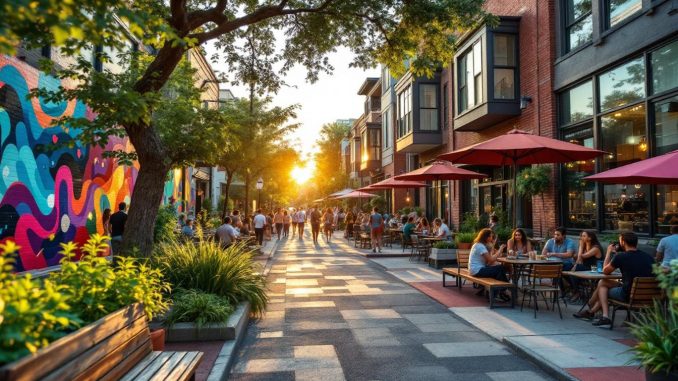
The American real estate market continues to evolve rapidly, with emerging neighborhoods reshaping investment opportunities across the nation. As we navigate through 2026, certain urban areas are experiencing unprecedented growth, attracting both homebuyers and investors seeking value appreciation. These up-and-coming neighborhoods in the US in 2026 are characterized by rising property values, infrastructure improvements, and an influx of young professionals and families. With mortgage rates stabilizing around 5.5% and housing prices in these zones increasing by approximately 10% compared to 2025, strategic location selection has become paramount for real estate success.
Understanding which areas offer the best potential requires analyzing demographic trends, economic development initiatives, and local market dynamics. The National Association of Realtors reports that emerging neighborhoods are experiencing a 15% population increase, signaling robust demand and future appreciation potential. This article examines the most promising locations, investment rationale, and market factors shaping real estate opportunities in 2026.
What defines emerging residential areas right now
Emerging neighborhoods share distinct characteristics that signal their transformation from overlooked districts to desirable communities. Urban revitalization projects serve as primary catalysts, bringing new commercial spaces, parks, and public transportation infrastructure. Cities across the United States are investing billions in these initiatives, fundamentally altering neighborhood appeal and accessibility.
Demographic shifts play an equally significant role. Young professionals seeking affordable alternatives to established neighborhoods drive demand in these areas. The average home price in emerging zones remains 20-35% below prime districts while offering comparable amenities. This price differential creates substantial entry points for first-time buyers and investors alike.
Gentrification patterns reveal themselves through visible markers: independent coffee shops replacing vacant storefronts, art galleries opening in former industrial spaces, and restaurants offering diverse cuisines. These cultural indicators precede significant property value increases, typically by 18-24 months according to U.S. Census Bureau data.
Transit-oriented development represents another defining feature. Neighborhoods within half a mile of new metro stations or bus rapid transit lines experience accelerated appreciation. The convenience factor attracts commuters willing to pay premium prices for reduced travel time. Cities like Austin, Phoenix, and Charlotte are expanding their public transportation networks, creating new opportunity zones along these corridors.
School district improvements cannot be overlooked. Families prioritize education quality when selecting neighborhoods. Districts investing in new facilities, technology, and teacher recruitment see corresponding increases in surrounding property values. This factor particularly influences single-family home markets where families seek long-term stability.
Crime rate reductions also signal neighborhood transformation. Areas implementing community policing initiatives and seeing consistent year-over-year decreases in property crime become increasingly attractive to risk-averse buyers. Safety improvements often correlate with increased foot traffic, business development, and overall neighborhood vitality.
Investment advantages in developing districts
Purchasing property in up-and-coming neighborhoods in the US in 2026 offers multiple financial advantages over established markets. The primary benefit remains purchase price accessibility. Buyers can acquire larger properties or multiple units for the same investment required for smaller spaces in premium areas. This square footage advantage translates to better rental yields and appreciation potential.
Appreciation velocity in emerging neighborhoods typically outpaces mature markets. While established districts might see 3-4% annual increases, developing areas often experience 8-12% growth during transformation phases. This accelerated appreciation builds equity rapidly, enabling refinancing opportunities or portfolio expansion within shorter timeframes.
Rental demand in these neighborhoods remains consistently strong. The same affordability factors attracting buyers appeal to renters seeking quality housing at reasonable rates. Vacancy rates in emerging areas average 4-6%, compared to 8-10% in oversaturated markets. Lower vacancy translates to more predictable cash flow and reduced carrying costs for investment properties.
Tax incentives frequently accompany neighborhood revitalization efforts. Many municipalities offer property tax abatements, historic renovation credits, or opportunity zone benefits to encourage investment in target areas. These incentives can reduce holding costs by 15-25% during initial ownership years, significantly improving investment returns.
The mortgage interest rate environment in 2026 remains relatively favorable for qualified buyers. At 5.5%, financing costs allow positive leverage when rental income exceeds debt service. Investors can amplify returns through strategic financing while maintaining comfortable debt coverage ratios.
Diversification benefits should not be underestimated. Including emerging neighborhood properties in a real estate portfolio reduces concentration risk. Geographic and price point diversification protects against localized market downturns while capturing growth across multiple markets simultaneously.
Prime locations showing strongest momentum
Several specific neighborhoods across the United States demonstrate exceptional promise based on current development trajectories and market fundamentals. In Detroit, the Corktown district continues its remarkable transformation. Once characterized by abandoned buildings, this area now hosts technology companies, boutique hotels, and renovated Victorian homes. Property values have increased 45% over the past three years, with momentum expected to continue through 2028.
Phoenix’s Roosevelt Row arts district exemplifies creative-driven neighborhood evolution. This downtown area attracts artists, galleries, and craft breweries, creating a vibrant cultural scene. Single-family homes that sold for $180,000 in 2023 now command $265,000, reflecting sustained demand from millennials and remote workers seeking urban lifestyle amenities.
In Atlanta, the West End neighborhood benefits from proximity to the BeltLine trail project and new mixed-use developments. Historic bungalows are being restored while new construction fills vacant lots. The area’s median home price remains 40% below citywide averages, presenting significant value opportunities for investors willing to take moderate risk.
Nashville’s Wedgewood-Houston district has emerged as the city’s next hot spot. Positioned between downtown and established neighborhoods, this former industrial area now features converted warehouses, new restaurants, and creative office spaces. The neighborhood’s population grew 22% between 2024 and 2026, with corresponding increases in property values and rental rates.
Portland’s Jade District in East Portland showcases how immigrant communities drive neighborhood revitalization. Asian-owned businesses, restaurants, and cultural centers have transformed this area into a destination district. Property investors benefit from both cultural authenticity and increasing mainstream appeal, with home prices appreciating 35% since 2024.
In Miami, the Little Haiti neighborhood represents one of the last affordable areas near downtown. Despite concerns about displacement, development continues with new apartment complexes, retail spaces, and infrastructure improvements. Buyers purchasing now position themselves ahead of anticipated appreciation as downtown Miami’s growth pushes outward.
| Neighborhood | Average Home Price 2026 | Population Growth 2024-2026 | Projected Annual Appreciation |
|---|---|---|---|
| Detroit Corktown | $285,000 | 18% | 9-11% |
| Phoenix Roosevelt Row | $265,000 | 15% | 8-10% |
| Atlanta West End | $245,000 | 12% | 10-13% |
| Nashville Wedgewood-Houston | $425,000 | 22% | 7-9% |
| Portland Jade District | $395,000 | 14% | 8-11% |
| Miami Little Haiti | $340,000 | 16% | 11-14% |
How financing costs shape buying decisions
The current mortgage rate environment fundamentally influences investment feasibility in emerging neighborhoods. At 5.5%, the cost of borrowing requires careful analysis of expected returns versus debt service obligations. Investors must ensure that rental income or anticipated appreciation justifies financing costs over the holding period.
Loan-to-value ratios in emerging neighborhoods often differ from established markets. Lenders may require 25-30% down payments in areas they perceive as higher risk, compared to 20% in proven markets. This increased equity requirement affects cash-on-cash returns and limits the number of properties investors can acquire with available capital.
Interest rate sensitivity varies by investment strategy. Buy-and-hold investors focusing on long-term appreciation can better absorb higher financing costs than fix-and-flip operators working on compressed timelines. The former benefits from property appreciation and mortgage paydown over decades, while the latter must generate profits within months despite interest expenses.
Adjustable-rate mortgages present both opportunities and risks in 2026’s rate environment. Initial rates starting 0.5-0.75% below fixed rates improve short-term cash flow, but future rate adjustments could eliminate this advantage. Investors using ARMs should model worst-case scenarios where rates increase to caps, ensuring properties remain profitable under adverse conditions.
Refinancing opportunities emerge as properties appreciate and neighborhoods stabilize. Buyers purchasing today at 5.5% might refinance at lower rates in 2-3 years if the Federal Reserve reduces benchmark rates. This potential for rate improvement provides additional upside beyond property appreciation alone.
Alternative financing structures gain traction in emerging markets. Seller financing, private money loans, and partnership arrangements offer flexibility that traditional mortgages cannot match. These creative solutions enable transactions that conventional lending guidelines might reject, opening opportunities for sophisticated investors willing to structure complex deals.
Risk assessment and professional guidance
Investing in emerging neighborhoods carries inherent risks that require thorough evaluation before committing capital. Gentrification timelines prove unpredictable. Neighborhoods showing promise can stall if economic conditions deteriorate or if planned developments fail to materialize. Investors must prepare for extended holding periods without guaranteed appreciation.
Liquidity concerns represent another significant risk. Properties in emerging areas typically take longer to sell than those in established neighborhoods. During market downturns, these properties may become difficult to exit at acceptable prices. Investors should maintain adequate reserves to weather extended vacancy periods or unexpected holding costs.
Neighborhood trajectory can reverse unexpectedly. Economic shocks, policy changes, or infrastructure project cancellations can derail transformation processes. Areas that appeared promising in 2025 might struggle in 2026 if circumstances change. Diversification across multiple neighborhoods and cities mitigates this concentration risk.
Working with experienced real estate professionals proves essential when navigating emerging markets. Local agents understand neighborhood nuances, development pipelines, and micro-market trends that national data cannot capture. Their expertise helps identify properties positioned for maximum appreciation while avoiding areas with fundamental challenges.
Property inspectors familiar with older housing stock common in emerging neighborhoods identify structural issues that inexperienced buyers might overlook. Renovation costs in these areas can quickly exceed budgets if foundation problems, electrical system failures, or plumbing issues emerge after purchase. Thorough due diligence prevents costly surprises.
Real estate attorneys specializing in investment properties ensure proper entity structuring, contract review, and regulatory compliance. Their guidance protects investors from legal pitfalls that could jeopardize entire portfolios. The modest cost of professional legal counsel pales compared to potential losses from improperly structured transactions.
Financial advisors help integrate real estate investments into broader wealth management strategies. They ensure property purchases align with retirement goals, tax situations, and risk tolerance. This holistic approach prevents over-concentration in real estate at the expense of portfolio diversification.
Strategic positioning for future growth
Success in emerging neighborhood investment requires patience and strategic thinking beyond immediate returns. The most successful investors identify areas 2-3 years before mainstream recognition, purchasing properties while prices remain suppressed. This early positioning captures maximum appreciation as neighborhoods transform and attract broader buyer interest.
Value-add opportunities abound in emerging markets. Properties requiring cosmetic updates or minor renovations can be acquired below market value, improved cost-effectively, and either sold for profit or held for enhanced rental income. This forced appreciation strategy accelerates returns compared to passive buy-and-hold approaches.
Building relationships within target neighborhoods provides competitive advantages. Local contractors, property managers, and other investors share information about upcoming opportunities before they reach public listings. These off-market deals often offer better pricing and terms than widely marketed properties.
Monitoring development permits, zoning changes, and infrastructure projects reveals future neighborhood trajectories. Public records provide free intelligence about where cities plan to invest resources. Savvy investors position themselves along these development paths, capturing appreciation as projects reach completion.
The rental market dynamics in emerging neighborhoods favor investors who understand tenant demographics. Young professionals seek modern amenities and walkable neighborhoods, while families prioritize space and school quality. Tailoring properties to target renter profiles maximizes occupancy rates and justifies premium rents.
As 2026 progresses, the neighborhoods showing strongest momentum today will likely mature into established markets by decade’s end. Investors entering now participate in wealth creation cycles that reward early adoption and calculated risk-taking. The key lies in thorough research, professional guidance, and maintaining realistic expectations about timelines and returns.