
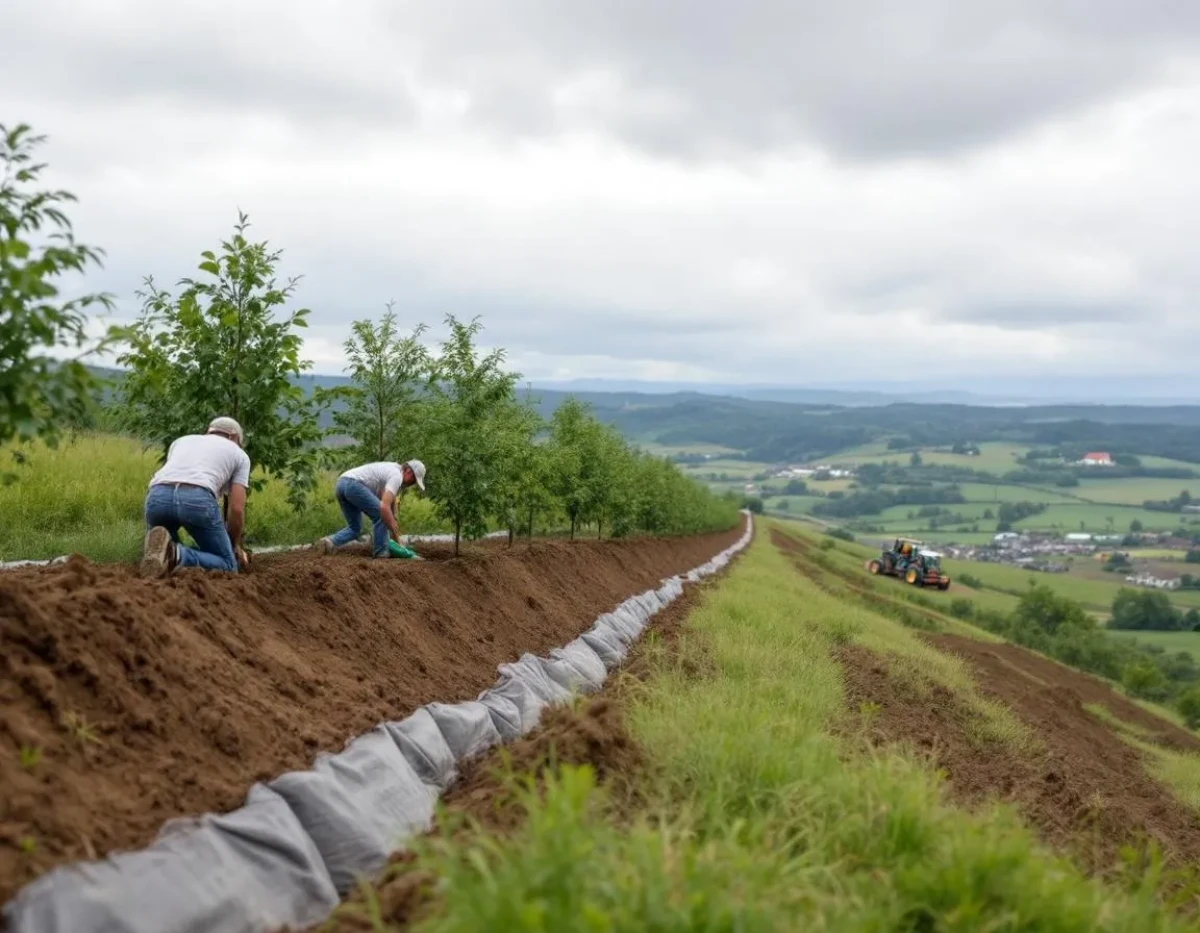
Soil erosion poses a significant threat to environmental stability, agricultural productivity, and infrastructure integrity worldwide. As climate change intensifies extreme weather events and human activities continue to alter landscapes, the need for effective erosion control measures has never been more pressing. This article delves into the science behind soil erosion, explores a range of innovative control techniques, and examines the far-reaching impacts of erosion management on ecosystems, economies, and communities. By understanding and implementing these crucial practices, we can work towards preserving our planet's most fundamental resource.
Understanding Soil Erosion: Causes and Consequences
Soil erosion is a natural process that has shaped landscapes for millennia. However, human activities have dramatically accelerated this phenomenon, leading to severe environmental and economic repercussions. Wind and water are the primary agents of erosion, with rainfall being particularly destructive in many regions.
The causes of accelerated erosion are multifaceted:
- Deforestation and removal of vegetation cover
- Intensive agriculture and overgrazing
- Urban development and soil sealing
- Mining and quarrying activities
- Climate change-induced extreme weather events
The consequences of unchecked erosion are far-reaching and often irreversible. Topsoil loss diminishes agricultural productivity, reducing crop yields and food security. Eroded sediments clog waterways, leading to increased flooding risks and degraded aquatic habitats. The economic toll is staggering, with billions of dollars lost annually due to reduced land value, infrastructure damage, and water treatment costs.
In agricultural settings, erosion depletes soil of essential nutrients and organic matter, necessitating increased fertilizer use and potentially contributing to water pollution. The loss of topsoil can take centuries to replenish naturally, making erosion control a critical aspect of sustainable land management.
Erosion Control Techniques: From Ancient Wisdom to Modern Innovation
Combating soil erosion requires a multifaceted approach, combining time-tested methods with cutting-edge technologies. Here are some of the most effective erosion control measures:
Vegetative Methods
Cover crops and mulching are among the simplest yet most effective erosion control techniques. By maintaining a protective layer over the soil, these methods reduce the impact of raindrops, slow water runoff, and increase water infiltration. Native grasses and legumes are particularly beneficial as cover crops, as they improve soil structure and add organic matter.
Contour plowing involves tilling and planting along the contours of a slope rather than up and down. This practice creates small ridges that slow water flow and increase infiltration. When combined with strip cropping, where erosion-resistant crops are alternated with more vulnerable ones, the effectiveness is further enhanced.
Structural Methods
Terracing is an ancient technique that remains highly effective for controlling erosion on steep slopes. By creating level platforms supported by retaining walls, terraces reduce the length of the slope and the velocity of water runoff. Modern terracing designs incorporate drainage systems to manage excess water efficiently.
Gabions are wire mesh containers filled with rocks or concrete pieces, used to stabilize slopes and shorelines. These versatile structures can be stacked to create retaining walls or placed along waterways to prevent bank erosion. Gabions are particularly useful in areas prone to flash flooding or where vegetation establishment is challenging.
Biotechnical Methods
Bioengineering combines structural elements with living plant materials to create robust erosion control systems. Techniques such as live staking, where cuttings of woody plants are inserted into the soil to take root, and brush layering, which involves placing branches between layers of soil on a slope, leverage the natural strength of plant root systems to stabilize soil.
These methods not only control erosion but also enhance biodiversity, improve water quality, and create habitat for wildlife. The aesthetic value of bioengineered solutions makes them particularly suitable for urban and recreational areas.
Technological Innovations
Advances in materials science have led to the development of geotextiles and erosion control blankets. These synthetic or natural fiber mats protect soil from raindrop impact and wind erosion while allowing vegetation to establish. Some modern geotextiles are biodegradable, seamlessly integrating with the landscape over time.
Hydromulching is a technique where a slurry of water, seed, fertilizer, and mulch is sprayed onto bare soil. This method provides immediate protection and promotes rapid vegetation establishment, making it ideal for large-scale reclamation projects or steep slopes where traditional seeding is impractical.
The Broader Impact: Ecosystem Services and Climate Resilience
Effective erosion control extends far beyond the immediate prevention of soil loss. These measures play a crucial role in maintaining and enhancing ecosystem services, contributing to climate change mitigation and adaptation strategies.
Water Resource Management
By reducing sediment load in waterways, erosion control measures improve water quality and aquatic habitat health. This has cascading benefits for fisheries, recreational water use, and drinking water supply systems. In urban areas, erosion control techniques can be integrated into green infrastructure designs, helping to manage stormwater runoff and reduce the burden on municipal water treatment facilities.
Carbon Sequestration
Many erosion control practices, particularly those involving vegetation establishment, contribute to carbon sequestration. Cover crops and reforestation efforts not only protect soil but also capture atmospheric carbon dioxide, mitigating climate change impacts. The preservation of topsoil through erosion control maintains soil organic carbon, a significant carbon sink.
Biodiversity Conservation
Erosion control measures often create or preserve habitats for diverse plant and animal species. Riparian buffer zones, for example, protect waterways from erosion while providing critical habitat corridors for wildlife. The use of native plant species in erosion control projects can support local pollinators and other beneficial organisms, enhancing overall ecosystem resilience.
Economic Implications: The Cost of Action vs. Inaction
While implementing comprehensive erosion control measures requires initial investment, the long-term economic benefits far outweigh the costs. A cost-benefit analysis of erosion control should consider:
- Preserved agricultural productivity and land value
- Reduced infrastructure maintenance and repair costs
- Lower water treatment expenses
- Enhanced ecosystem services valuation
- Potential carbon credits or other environmental incentives
Case studies from around the world demonstrate the economic viability of erosion control projects. For instance, the Loess Plateau Watershed Rehabilitation Project in China transformed a severely eroded region into productive agricultural land, significantly improving local livelihoods and ecological conditions. The project's success has made it a model for large-scale erosion control and sustainable land management initiatives globally.
Policy and Regulation: Driving Sustainable Land Management
Effective erosion control requires a supportive policy framework and regulatory environment. Governments at all levels play a crucial role in promoting and enforcing sustainable land management practices:
Land Use Planning
Zoning regulations and development codes can incorporate erosion control requirements, ensuring that new construction and land-use changes do not exacerbate erosion problems. Buffer zone mandates along waterways and steep slopes can protect vulnerable areas from development-induced erosion.
Agricultural Policies
Incentive programs for farmers who implement erosion control measures can drive widespread adoption of sustainable practices. The U.S. Department of Agriculture's Conservation Reserve Program, for example, provides financial incentives for farmers to remove environmentally sensitive land from agricultural production and implement conservation practices.
Environmental Regulations
Stringent enforcement of environmental protection laws, particularly those related to water quality and land reclamation, can compel industries to implement robust erosion control measures. Mining and construction sectors, in particular, should be held to high standards of site restoration and erosion mitigation.
Future Directions: Integrating Technology and Nature-Based Solutions
As we look to the future of erosion control, several promising trends emerge:
Remote Sensing and AI
Satellite imagery and machine learning algorithms are enhancing our ability to detect and predict erosion risks at large scales. These technologies enable more targeted and efficient implementation of erosion control measures, particularly in remote or extensive areas.
Biomimicry
Drawing inspiration from natural systems, engineers and designers are developing innovative erosion control solutions that mimic the resilience and efficiency of ecosystems. For example, artificial root systems inspired by mangrove forests are being developed to stabilize coastal areas against erosion and sea-level rise.
Circular Economy Approaches
Integrating erosion control with waste management and resource recovery can create synergies and economic opportunities. For instance, using recycled materials in erosion control products or incorporating biochar from agricultural waste into soil stabilization techniques can address multiple environmental challenges simultaneously.
Erosion control is not merely a technical challenge but a fundamental aspect of sustainable development and environmental stewardship. By implementing comprehensive erosion control measures, we protect our soil, water, and ecosystems, ensuring the resilience of our landscapes and the prosperity of future generations. As climate change and human activities continue to put pressure on our natural resources, the importance of effective erosion management will only grow. Through innovation, policy support, and community engagement, we can turn the tide on soil erosion and build a more sustainable relationship with our planet's most vital resource.