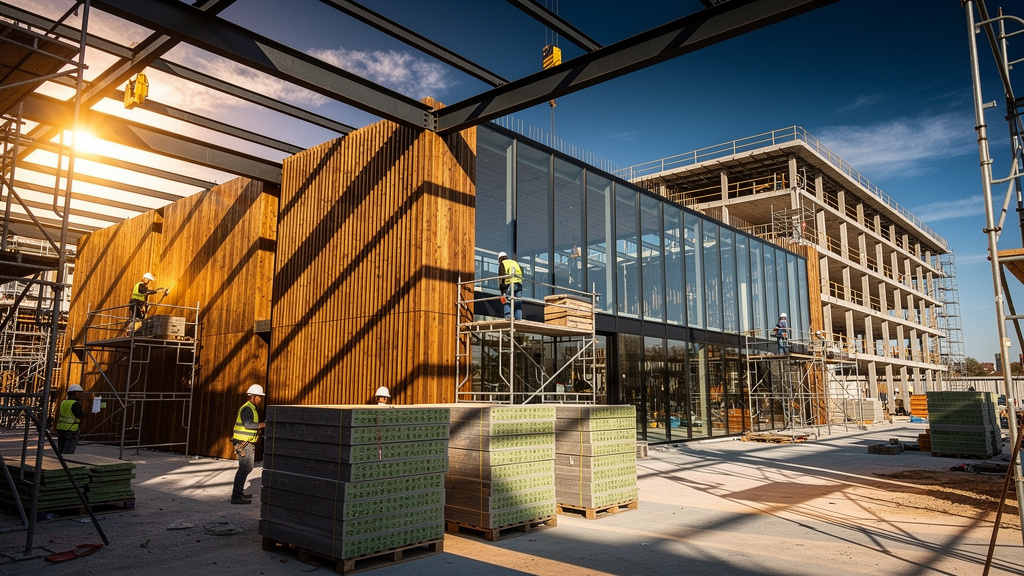
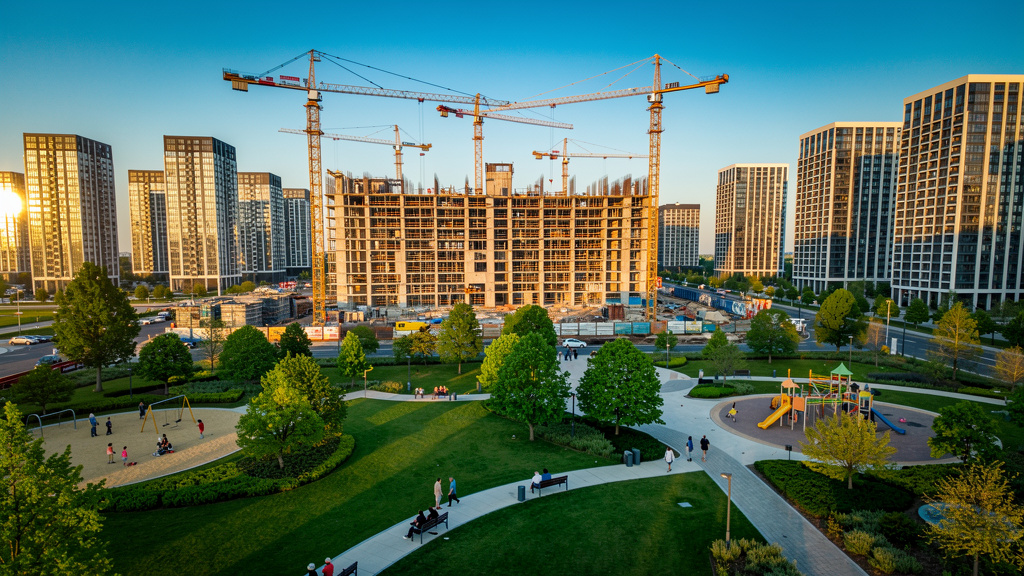
Infrastructure projects and long-term real estate value share a relationship that every serious property investor should understand before committing capital. When a new metro line opens, when a highway bypass gets built, or when a fiber-optic network reaches a previously underserved district, the surrounding real estate market shifts — sometimes dramatically. Zones served by new infrastructure developments can see property values rise by approximately 15% over time, according to data from the Fédération des Promoteurs Immobiliers. That figure alone explains why developers, urban planners, and private buyers track public investment announcements with such close attention. Understanding the mechanics behind this relationship helps investors make smarter, longer-horizon decisions.
How infrastructure projects shape real estate market dynamics
The connection between public infrastructure and property prices operates on multiple levels simultaneously. At the most direct level, a new transport link reduces commute times, which makes previously unattractive neighborhoods suddenly viable for daily living. Buyers who once dismissed an area because of poor connectivity start reconsidering. Demand rises, supply stays fixed in the short term, and prices follow.
Indirect effects matter just as much. New infrastructure attracts businesses, which generate employment, which draws workers who need housing. A single logistics hub or technology campus can transform an entire micro-market within five years. The Grand Paris Express project, scheduled between 2020 and 2030, already illustrates this: municipalities along the planned lines — Saint-Denis Pleyel, Villejuif, Noisy-Champs — recorded price increases well before any trains started running, purely on the anticipation of future connectivity.
The types of infrastructure that generate the strongest price signals include:
- Public transit expansions (metro, tram, RER extensions) — the highest multiplier effect on residential values
- Road and highway improvements that reduce travel times to employment centers
- Digital infrastructure, including fiber-optic rollouts, which now influences remote-worker location decisions
- Healthcare and education facilities, whose presence stabilizes neighborhoods and attracts family buyers
Not every infrastructure project produces the same outcome. A new industrial road may depress residential values nearby while boosting commercial land prices. Noise, pollution, and traffic disruption during construction phases can create temporary price dips that savvy investors treat as buying windows. The key distinction lies in whether the project improves liveability or merely industrial throughput — buyers and tenants respond to the former, not the latter.
According to data from INSEE, French municipalities that received significant transport investment between 2010 and 2020 outperformed the national average in residential price growth by a measurable margin. The causality runs in both directions: growing cities attract infrastructure spending, and infrastructure spending attracts further growth. Identifying which dynamic is at play in a given market is the analytical challenge every real estate professional faces.
Recent developments redefining property prices across French territories
France's current infrastructure pipeline is reshaping several regional markets in ways that won't fully materialize for another decade. The Lyon metropolitan area has been expanding its public transit network since 2021, with new tram and bus rapid transit corridors opening progressively through 2025. Neighborhoods like Gerland and Confluence, already undergoing urban renewal, are seeing compounding effects: transit investment layered on top of mixed-use development creates unusually strong appreciation potential.
Beyond transport, energy infrastructure is becoming a real estate variable in its own right. Properties connected to district heating networks or located near renewable energy production zones attract buyers sensitive to long-term operating costs. With the DPE (Diagnostic de Performance Énergétique) now influencing both sale prices and rental eligibility under French law, energy-related infrastructure directly affects a property's legal and commercial status. A building that gains access to low-carbon energy through a new district network can move from an E rating to a C, unlocking significant value.
The VEFA (Vente en l'État Futur d'Achèvement) market has adapted to this reality. Developers now systematically position new-build programs around announced infrastructure corridors, marketing proximity to future stations or planned urban parks as primary selling points. Buyers purchasing off-plan today are essentially betting on infrastructure delivery timelines — a calculated risk that has paid off repeatedly in the Paris region over the past two decades.
Regional disparities remain wide. Cities like Bordeaux and Rennes, which invested heavily in high-speed rail connections, saw sustained price growth that smaller cities without equivalent connectivity could not match. The lesson for investors is geographic specificity: national averages obscure the micro-market dynamics that actually drive returns.
The stakeholders who drive infrastructure-linked real estate decisions
Governments at both local and national levels set the agenda through public spending plans, urban development zones, and regulatory frameworks. The designation of a ZAC (Zone d'Aménagement Concerté) or an OIN (Opération d'Intérêt National) signals where public money will flow and, consequently, where private capital should follow. Tracking these designations through official planning documents is one of the most reliable early-warning systems available to property investors.
Urban development agencies translate political decisions into spatial reality. Their master plans determine land use, density allowances, and public space allocation. When an agency publishes a PLU (Plan Local d'Urbanisme) revision that upzones a corridor, it creates immediate development pressure and price movement in affected parcels.
Private construction firms and property developers operate at the intersection of public planning and market demand. Their land acquisition patterns often predict infrastructure announcements: when a major developer quietly assembles plots in a specific district, experienced observers read it as a signal that infrastructure investment is forthcoming. Around 80% of real estate investors cite infrastructure access as a primary factor in location selection, which explains why developers treat infrastructure proximity as a marketing asset rather than an afterthought.
Individual buyers and institutional investors complete the picture. SCPI (Sociétés Civiles de Placement Immobilier) funds with long investment horizons have increasingly weighted their portfolios toward infrastructure-adjacent assets, recognizing that patient capital benefits most from the slow-burn appreciation that public investment generates. For private buyers using a PTZ (Prêt à Taux Zéro) or other subsidized financing, purchasing in an infrastructure development zone can combine below-market entry prices with above-market long-term appreciation.
Professional guidance from a notaire or a certified real estate advisor becomes particularly valuable in these contexts. Infrastructure-linked investment involves regulatory complexity — zoning changes, construction easements, environmental assessments — that requires specialist interpretation before any commitment.
What the next decade of infrastructure spending means for property investors
France's infrastructure investment pipeline through 2035 is substantial. The remaining phases of the Grand Paris Express will connect dozens of municipalities that currently lack direct metro access. National plans for railway modernization and electric vehicle charging infrastructure will alter commuting patterns and, by extension, residential location preferences. Each of these programs creates a forward-looking opportunity for investors willing to move ahead of the market.
Climate adaptation infrastructure deserves specific attention. Flood defense systems, urban cooling networks, and green corridor projects are increasingly funded through European Union mechanisms and national resilience plans. Properties located within or adjacent to these projects gain both physical protection and reputational value — two factors that will matter more, not less, as climate risk becomes a standard element of property valuation.
The loi Pinel framework and its successors have historically directed private investment toward zones defined partly by infrastructure criteria. As fiscal incentive structures evolve, the underlying logic remains: public policy uses tax benefits to channel private capital toward areas where infrastructure investment is already committed, aligning investor returns with urban development goals.
Timing remains the variable that separates good infrastructure-linked investments from great ones. Buying after a project is announced but before construction begins typically captures the largest share of the appreciation curve. Buying after completion means paying a price that already reflects the infrastructure premium. Reading planning documents, attending public consultations, and monitoring municipal budget allocations give investors the informational edge needed to act at the right moment. The relationship between public investment and private real estate value is predictable in direction — the art lies in getting the timing right.