
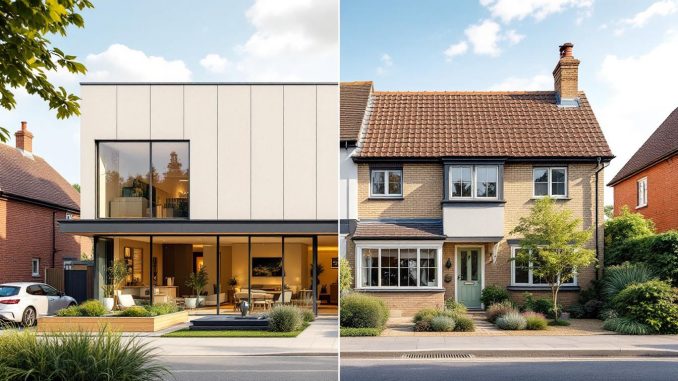
The UK property market continues to evolve rapidly, presenting investors with complex choices as we approach 2026. Understanding the key differences between new-build properties and existing homes has never been more critical for those seeking to maximise returns. With average prices for newly constructed homes reaching £300,000 compared to £250,000 for existing properties in 2023, the financial implications are substantial. This comprehensive analysis examines both investment routes, considering current market dynamics, projected growth rates of approximately 5% annually, and the specific advantages each option offers to different investor profiles in the context of new-build vs existing properties in the UK: where to invest in 2026.
Understanding the fundamental differences between property types
The distinction between new-build developments and existing properties extends far beyond construction dates. Modern new-builds typically incorporate the latest energy efficiency standards, meeting current Building Regulations that demand superior insulation, heating systems, and overall environmental performance. These properties often carry warranties from the National House Building Council (NHBC), providing buyers with protection for up to ten years against structural defects.
Existing properties, conversely, showcase established neighbourhoods with mature infrastructure. These homes frequently occupy larger plots with more generous room proportions than their contemporary counterparts. Character features such as period fireplaces, original flooring, and architectural details attract buyers willing to pay premiums in certain markets. The Royal Institution of Chartered Surveyors (RICS) notes that location maturity often compensates for outdated construction methods.
Maintenance requirements differ substantially between the two categories. New-builds demand minimal immediate investment, whereas existing properties may require significant expenditure on modernisation. Electrical systems, plumbing, roofing, and windows in older homes often need replacement or upgrading. Buyers should budget between £15,000 and £40,000 for comprehensive renovations in properties over thirty years old.
The conveyancing process varies considerably. New-build transactions involve purchasing directly from developers, often with reservation fees and stage payments during construction. Existing property sales follow traditional chains, where multiple transactions depend on each other. Completion timescales reflect these differences, with new-builds sometimes taking six to twelve months from reservation to handover, whilst existing properties typically complete within eight to twelve weeks.
Stamp duty calculations present another crucial distinction. First-time buyers purchasing new-builds under £425,000 benefit from relief schemes, though investors face additional surcharges. The UK Government periodically adjusts these thresholds, making professional tax advice essential for accurate cost projections.
Market dynamics shaping property investment in 2026
Economic forecasts suggest continued pressure on housing supply throughout 2026. The Office for National Statistics reports persistent undersupply, with annual construction falling short of demand by approximately 100,000 units. This imbalance supports price stability and rental yield potential across both segments.
Interest rates significantly influence investment viability. Current mortgage rates averaging 3.5% remain historically moderate, though projections indicate potential increases as inflationary pressures persist. Fixed-rate products dominate the buy-to-let market, with investors securing terms between two and five years to mitigate rate volatility. Lenders typically require 25% deposits for investment mortgages, with stricter affordability assessments than residential purchases.
Regional variations create distinct opportunities. Northern cities including Manchester, Liverpool, and Leeds demonstrate stronger rental yields, often exceeding 6% annually. Southern markets, particularly London and the Southeast, offer lower yields but historically stronger capital appreciation. Investors must balance immediate income against long-term growth potential when selecting locations.
Demographic shifts influence demand patterns. Remote working arrangements increase appeal for properties outside traditional commuter zones. Towns offering digital connectivity combined with lifestyle amenities attract professionals previously tied to urban centres. This trend benefits both new developments in expanding towns and existing properties in established communities with good infrastructure.
Regulatory changes continue reshaping the landscape. Energy Performance Certificate (EPC) requirements will tighten, with rental properties potentially requiring minimum C ratings by 2028. New-builds naturally meet these standards, whilst existing properties may need substantial investment in insulation, heating systems, and renewable energy installations to comply.
The Nationwide Building Society highlights that smaller properties, particularly one and two-bedroom units, outperform larger homes in rental demand. Young professionals and downsizers drive this trend, favouring low-maintenance properties in accessible locations over spacious family homes requiring extensive upkeep.
Investment considerations for newly constructed homes
New-build properties offer immediate advantages for investors seeking hassle-free acquisitions. Developer incentives frequently include furniture packages, legal fee contributions, and Help to Buy schemes that can reduce initial capital requirements. These sweeteners improve cash flow projections, particularly for first-time investors establishing portfolios.
Energy efficiency translates directly into lower running costs. Modern properties consume approximately 40% less energy than homes built before 2000, reducing utility bills for tenants and enhancing rental appeal. Superior insulation, double or triple glazing, and efficient boiler systems create comfortable living environments whilst minimising environmental impact.
Warranty protection provides peace of mind. The NHBC Buildmark warranty covers structural defects for ten years, with comprehensive protection for the first two years. This coverage eliminates unexpected repair costs during the critical early ownership period, allowing accurate financial planning and protecting investment returns.
However, new-builds carry specific disadvantages. Purchase premiums typically range between 10% and 20% above equivalent existing properties in the same area. This price differential means investors pay more per square foot, potentially reducing percentage returns on capital employed. Depreciation during the first five years can erode equity, particularly if purchased at peak market prices.
Location concerns merit careful evaluation. New developments often occupy greenfield sites or regeneration areas lacking established infrastructure. Schools, transport links, shops, and community facilities may take years to materialise. Early buyers gamble on promised improvements, with rental demand potentially disappointing if infrastructure development stalls.
| Feature | New-Build Properties | Existing Properties |
|---|---|---|
| Average Price (2023) | £300,000 | £250,000 |
| Energy Efficiency | EPC Rating A-B | EPC Rating D-E (typically) |
| Immediate Maintenance | Minimal (warranty covered) | £15,000-£40,000 potential |
| Plot Size | Compact (modern standards) | Generally larger |
| Completion Time | 6-12 months | 8-12 weeks |
| Warranty Protection | 10 years (NHBC) | Limited or none |
| Customisation Options | Some (pre-completion) | Full flexibility |
Evaluating opportunities in the existing property sector
Established properties present compelling value propositions for experienced investors. The £50,000 average price advantage over new-builds provides greater purchasing power, enabling acquisition of larger homes or properties in superior locations. This cost efficiency improves rental yields, with investors achieving better returns on capital deployed.
Negotiation flexibility distinguishes existing property transactions. Motivated sellers often accept offers below asking prices, particularly for homes requiring modernisation. Strategic buyers identify properties needing cosmetic improvements rather than structural work, adding value through targeted refurbishment. Investments of £10,000 to £20,000 in kitchens, bathrooms, and decoration can increase property values by £30,000 to £50,000.
Established neighbourhoods offer proven rental demand. Transport links, schools, shopping facilities, and community infrastructure already exist, eliminating uncertainty about future development. Tenant preferences often favour mature areas with character over new estates lacking atmosphere and amenities. Family renters particularly value proximity to outstanding-rated schools and green spaces.
Architectural diversity creates niche appeal. Victorian terraces, Edwardian semis, and post-war properties each attract specific tenant demographics. Period features command premium rents in certain markets, with professionals and creatives valuing character over modern convenience. Investors can target specific tenant profiles by selecting appropriate property styles.
However, existing properties demand thorough due diligence. Building surveys frequently reveal hidden defects including damp, subsidence, electrical faults, and roof deterioration. Professional inspections cost between £400 and £1,500 depending on property size and survey level, but prevent expensive surprises post-purchase. Investors must budget contingency funds for unexpected repairs.
Energy efficiency improvements represent significant ongoing investment. Meeting forthcoming EPC requirements may necessitate cavity wall insulation, loft insulation, boiler replacement, and double glazing installation. These improvements cost between £8,000 and £25,000, though government grants occasionally offset expenses for qualifying properties.
Maintenance schedules require active management. Boilers, appliances, and building components age predictably, demanding replacement every ten to twenty years. Investors should allocate approximately 1% of property value annually for maintenance reserves, ensuring funds exist for inevitable repairs without impacting cash flow.
Making informed investment choices for maximum returns
Successful property investment in 2026 demands alignment between investor circumstances and property characteristics. Risk tolerance significantly influences optimal choices. Conservative investors prioritise new-builds for warranty protection and minimal maintenance, accepting lower yields for reduced volatility. Adventurous investors target existing properties requiring renovation, leveraging sweat equity and market knowledge for superior returns.
Available capital shapes realistic options. Investors with limited deposits find new-build incentives attractive, whilst those commanding substantial funds exploit existing property discounts. The buy-to-let mortgage market offers products tailored to both sectors, though lenders increasingly scrutinise energy efficiency and rental income projections.
Time commitment varies dramatically between property types. New-builds suit passive investors seeking hands-off ownership, whilst existing properties reward active management and improvement programmes. Investors must honestly assess available time before committing to properties demanding extensive involvement.
Market timing considerations favour different approaches across economic cycles. New-build purchases during construction phases secure discounts, whilst existing property bargains emerge during market corrections when motivated sellers accept reduced prices. The projected 5% annual growth through 2026 suggests steady appreciation regardless of property type, though regional variations will create winners and losers.
Portfolio diversification offers risk mitigation. Experienced investors combine new-builds and existing properties, balancing immediate income against capital growth potential. Geographic diversification across regions with different economic drivers further reduces concentration risk. Professional property investment firms increasingly recommend mixed portfolios for optimal risk-adjusted returns.
Tax efficiency requires professional advice. Landlords face complex regulations around mortgage interest relief, capital gains tax, and inheritance planning. Structures including limited companies and family investment companies offer advantages for certain investors, though setup costs and ongoing compliance demand careful evaluation. Accountants specialising in property taxation provide essential guidance for maximising post-tax returns.
The decision between new-build and existing properties ultimately reflects individual circumstances rather than universal truths. Investors must conduct thorough research, engage qualified professionals including surveyors, solicitors, and financial advisers, and develop clear investment strategies aligned with personal goals. The UK property market rewards preparation, patience, and professional guidance regardless of chosen investment route.